

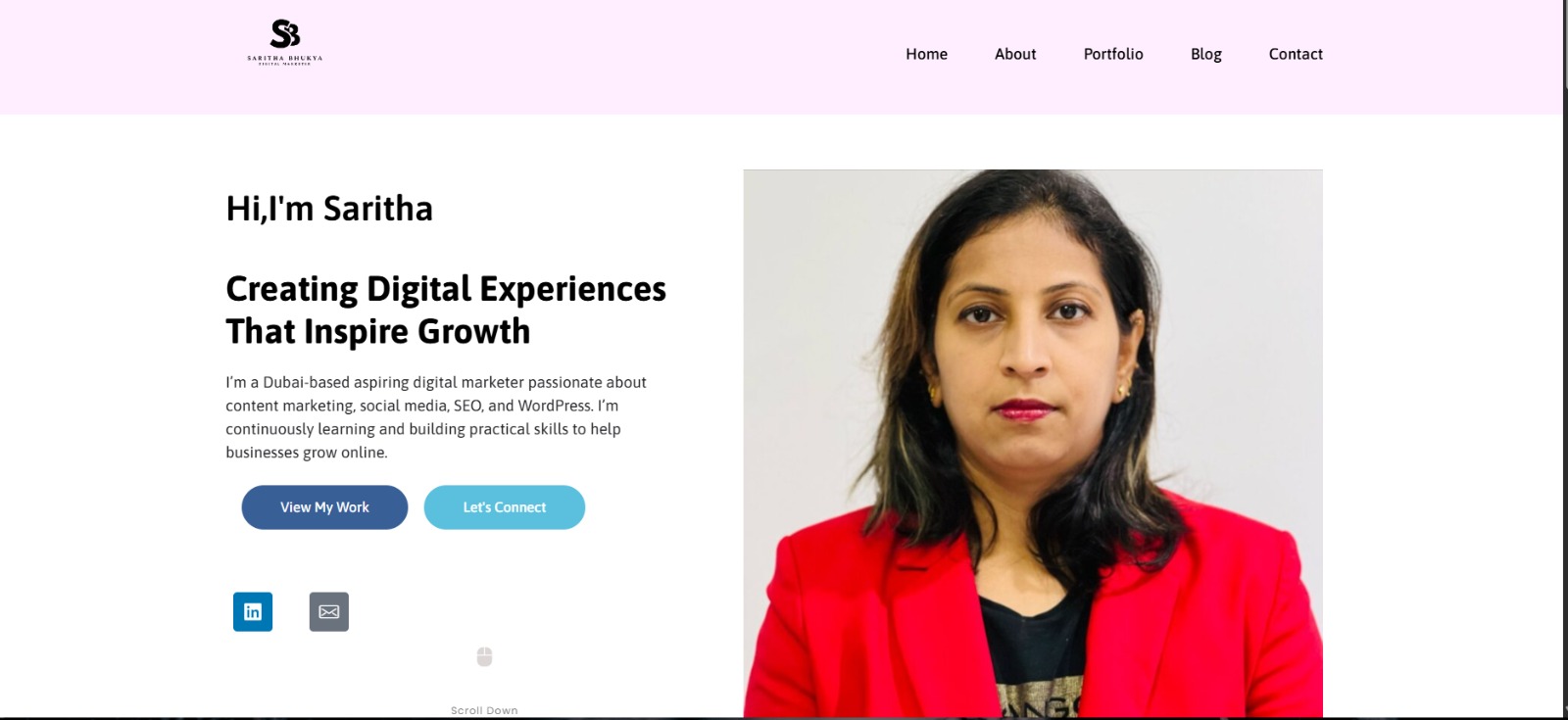
Building my first portfolio website was an important part of my digital marketing learning journey. I created this portfolio website using WordPress and Elementor to showcase my skills, projects, and practical experience.
The goal was to create a simple, professional, and user-friendly portfolio website that reflects my interest in digital marketing and makes it easy for visitors to explore my work.
Why I built My Portfolio Website
I wanted to create a portfolio website where I could bring together my digital marketing projects, content writing, social media work, and WordPress projects in one place.
Planning the Website
Before starting the design, I planned the main pages and content I wanted to include. I focused on creating a simple structure with clear navigation so visitors could easily learn about me, explore my portfolio, read my blog, and get in touch.
Designing the website with Elementor
I used Elementor to design the pages and arrange the different sections of my portfolio website. I focused on keeping the layout clean and easy to navigate, while making sure the website works well across different screen sizes.
I also worked on the typography, spacing, images, buttons, and navigation to create a consistent look throughout the website.
Adding My Digital Marketing Projects
I added my practical digital marketing projects to the portfolio website so visitors can see the skills I have developed through hands-on work. My projects include content writing, copywriting, social media marketing, and WordPress website development.
One of the projects I showcased is the Creative Cubs Grand Opening Poster, where I created a promotional design in Canva as part of my digital marketing practice. Adding projects like this helped me present my creative and marketing skills in a clear and professional way.
What I Learned
Building my portfolio website gave me practical experience beyond simply learning digital marketing concepts. I learned how to plan website content, organize pages, work with WordPress and Elementor, improve the user experience, and present my projects clearly.
I also learned that building a professional website requires attention to details such as layout, spacing, images, navigation, mobile responsiveness, and clear calls to action.
What I Would Improve
As I continue learning, I would like to improve my portfolio website by adding more detailed case studies, expanding my project work, and continuously improving the design and user experience. I also plan to keep updating the website as I develop new digital marketing skills and gain more practical experience.
Final Thoughts
Building my first portfolio website was an important step in my digital marketing journey. It helped me turn what I was learning into a practical project and gave me a place to showcase my skills and work.
The website will continue to grow as I learn, create new projects, and gain more experience in digital marketing.
Let’s Connect
Building this portfolio website was an important step in my digital marketing journey. If you’d like to explore my work, discuss a project, or connect with me, I’d love to hear from you.